
The “Bern, get ready” (BEready) pilot study
This research describes the pilot study for the “Bern, get ready” (BEready) study in the canton of Bern, Switzerland. The goal of the pilot study was to see if it is possible to set up a group of households that researchers can follow regularly over a long time, a so-called «cohort» study. We tested whether people would join, complete questionnaires, collect blood samples from their fingertip and nasal swabs by themselves and stay involved over a year. We looked at how household characteristics affected participation. The results will help us to plan for the BEready main study. An objective of the main study is to have a large group of people who will be ready to take part in research in the event of a future pandemic.
Text by Eva Maria Hodel & Nicola Low
Why did we do this research, and why is it important?
During the early part of the COVID-19 pandemic, there was very little real-time data available to guide decision-makers about the need for ongoing measures to protect people from COVID-19. Experts have said that having people on “standby” could allow information to be collected more quickly about the effects of a new pathogen on people’s health. This information would help decision-makers make decisions faster and based on better data. This is why we planned to set up such a group of households that could be quickly “activated” in a future pandemic.
How did we do this research?
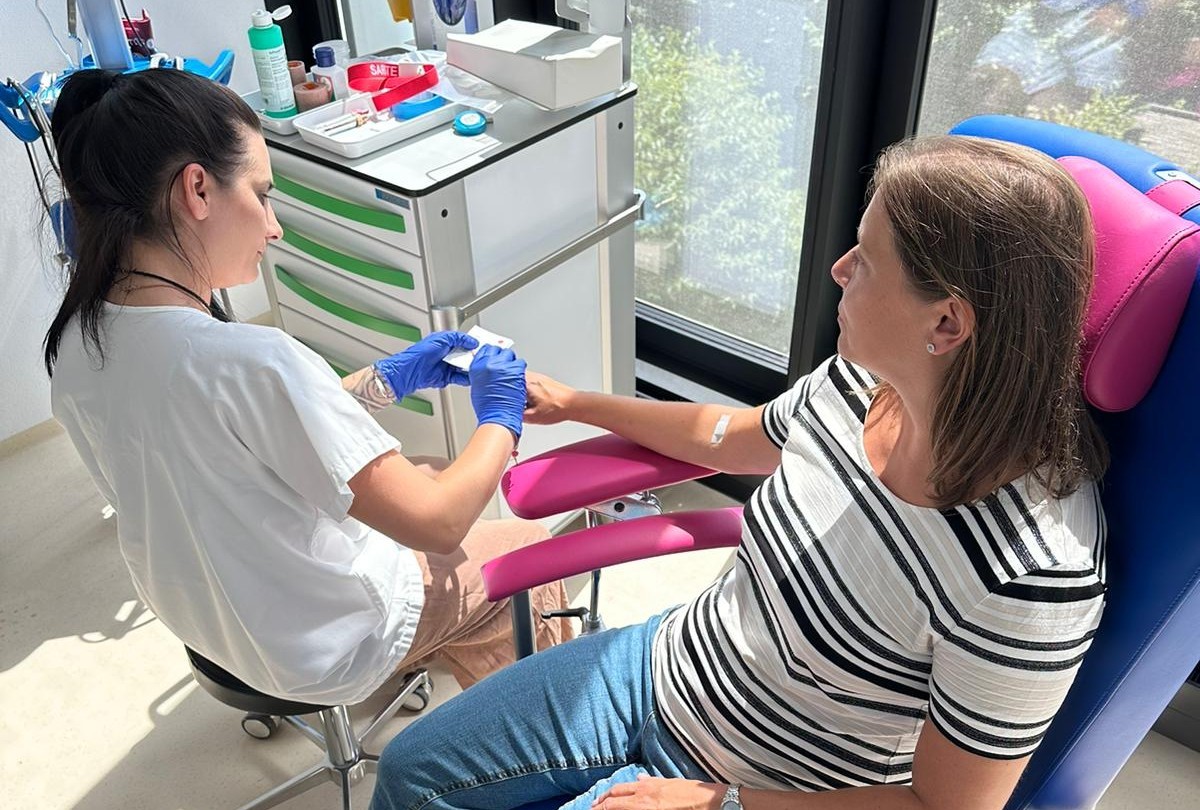
We invited a random sample of households in the canton of Bern to take part. Households included adults, children, cats and dogs. After the initial in-person visit with blood sampling, participants were followed up for one year. During that time, participants had to complete online questionnaires, self-collect fingertip blood samples and send them to us by surface mail. We looked at how many agreed to take part, if certain kinds of people were more likely to join, how well participants completed questionnaires and provided samples, and if they stayed involved after 12 months.
What did we find out?
We invited 1,138 households and 106 (9%) agreed to participate in the pilot study. Two more households volunteered to take part. The total of 108 households included 193 people (about 2 per household) and 44 pets. Participation was lower among larger households and people with lower levels of income or of education. After one year, 172 of the 193 participants (89%) from 101 of 108 households (94%) completed a follow-up survey, and 151 of them (88%) also returned a blood sample.
What does it mean?
The pilot study showed that setting up a cohort of households and keeping in touch with them is feasible. Refinements to how participants are enrolled and retained would improve the composition of the cohort. If the next pandemic requires a lockdown, it would be simple to ask people to take part in research and they could take essential samples and complete questionnaires at home. Such a cohort could be a valuable tool for pandemic preparedness research.
Further information
Full article reference
Hodel EM, Wegmüller S, Iff F, et al. ‘Bern, get ready’, BEready, a household-based cohort study for pandemic preparedness research in Switzerland: pilot study. BMJ Open 2025;15:e109555. doi: 10.1136/bmjopen-2025-109555.
You can find the whole article in English here.