

Postcard from the Democratic Republic of the Congo
Text: Prof Dr med Nicola Low
Arrival
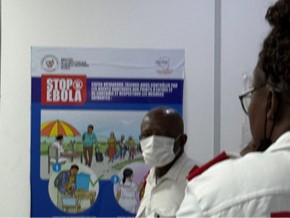
I’ve arrived at Kinshasa N’djili Airport to work on our project about mpox in the Democratic Republic of Congo (DRC). But one week ago, the World Health Organization announced a Public Health Emergency of International Concern – because of a new outbreak of Ebola disease caused by the Bundibugyo strain. Things happening here in DRC are relevant to the research that you are contributing to in the BEready cohort study. I expected to find a lot of checks and activity on arrival – but the posters about Ebola are, I think, from the last Ebola outbreak 2025. The usual check for my certificate of yellow fever vaccination was uneventful.
Monday, 25th May 2026
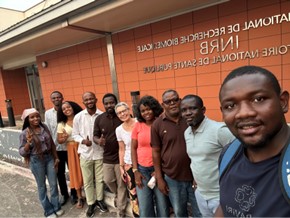
We arrive at the offices of the Institut Nationale de Recherche Biomédicale (INRB). Dr med Jean-Claude Makangara Cigolo, my PhD student, has already been here for a week, setting up a new assay. We are investigating the epidemiology of sexually transmitted infections among people suspected of having mpox. INRB is known for its research on infectious diseases; essential capacity for a country which experiences more than its fair share of outbreaks. They have developed enormous expertise in rapid analysis of the whole genetic sequences of pathogens to identify and track new patterns of spread. They identified the new strain of mpox virus, clade Ib, which we are now studying. And they identified that the ongoing outbreak in Ituri Province is caused by the Bundibugyo strain of the Ebola virus. Only 4 days after receiving samples, they had worked out the whole genetic sequence of the new strain and made it available online for anyone to see and use for research . The Bundibugyo strain of Ebola virus is not detected by the test that is available in many laboratories.
Tuesday, 26th May 2026
More Congolese colleagues who work in European universities are returning to DRC to contribute to the response to the Bundibugyo outbreak. Although this is a difficult situation, and people are very busy in meetings, in the lab and doing analyses, it’s also nice to have a chance to see each other, in person – most of our meetings have to be on online. Bad news today - the government of Canada is banning people from DRC, Uganda and South Sudan who have applied for permission to stay in Canada. And will make anyone who has been in those areas quarantine themselves for 21 days on arrival. This follows entry bans by the USA, and closure of borders with DRC by Rwanda and Uganda. For many people, travel bans appear to make sense. We remember them from the COVID-19 pandemic. For this outbreak, a travel ban for a whole country does not make sense. The Bundibugyo virus, like all Ebola viruses, is transmitted by direct contact with the body fluids of an infected person. Also, people are most infectious when they are already quite sick. The outbreak is concentrated in Ituri province in the far northeast of the country. All the people who have become infected came into direct contact with an infected person when they were sick. 120 million of the 124 million people in DRC do not live in Ituri province, so cannot be infected. The rational measures are to take temperatures and ask people about symptoms on leaving the country, and at the port of entry, to have secure and safe treatment places in the country to bring people who become unwell, and to have strong contact tracing procedures if someone is found to be sick. I hope the Swiss government does not ban entry or impose quarantine.
Wednesday, 27th May 2026
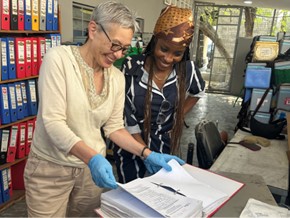
A busy day talking about our studies with the research teams. The data collection for mpox is DRC is not online, as it is in BEready. When people visit a treatment centre because they have symptoms that might be mpox, staff at the clinic fill in details by hand on paper forms. These forms are sent to INRB with the samples for testing. Staff at INRB have to enter the data. And then we need to check that the data from the questionnaires are linked with the results from the laboratory tests.
Thursday, 28th May 2026
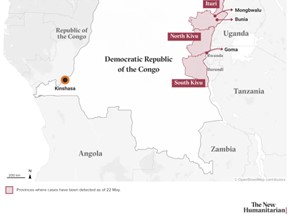
The head of the World Health Organization, Dr. Tedros Adhanom Ghebreyesus, arrived in Kinshasa today. He will travel to Ituri province to meet healthcare workers and others who are dealing with the outbreak now. Members of our team at INRB and from Belgium will also travel to Ituri province to scale up and speed up the diagnostic testing for Ebola Bundibugyo and to plan research studies to understand the transmission and characteristics of the disease caused by Ebola Bundibugyo. Dr. Tedros made some important points about why the outbreak was already widespread before Ebola Bundibugyo was identified. He warned of the ‘catastrophic collision of disease and conflict’. First, violence and insecurity have already caused widespread poverty and hunger, with damaged healthcare and road conditions. Second, he stated that there are no vaccines or specific treatments for Ebola Bundibugyo, so it will take longer to bring the outbreak under control. Third, building trust is essential to tackle misinformation in the community, which is hindering efforts to encourage people to seek care and to conduct safe burials.
Friday, 29th May 2026

Good news – the first patient known to have recovered from Ebola Bundibugyo left the treatment centre today. At the end of a productive and exciting week, we went out with the team for Congolese music, food and beers. Delicious.
Saturday, 30th May 2026
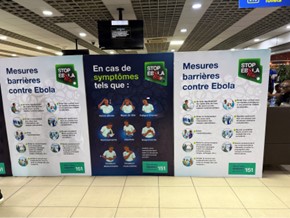
A quiet day at the hotel before going to the airport. Now there are many more preventive activities. A health post at the entrance to take your temperature and ask about symptoms. There are new posters all over the airport. And on arrival in Brussels, more posters and information leaflets. This was a very special time to be in Kinshasa.