
Reliable self-reporting of respiratory infections in households
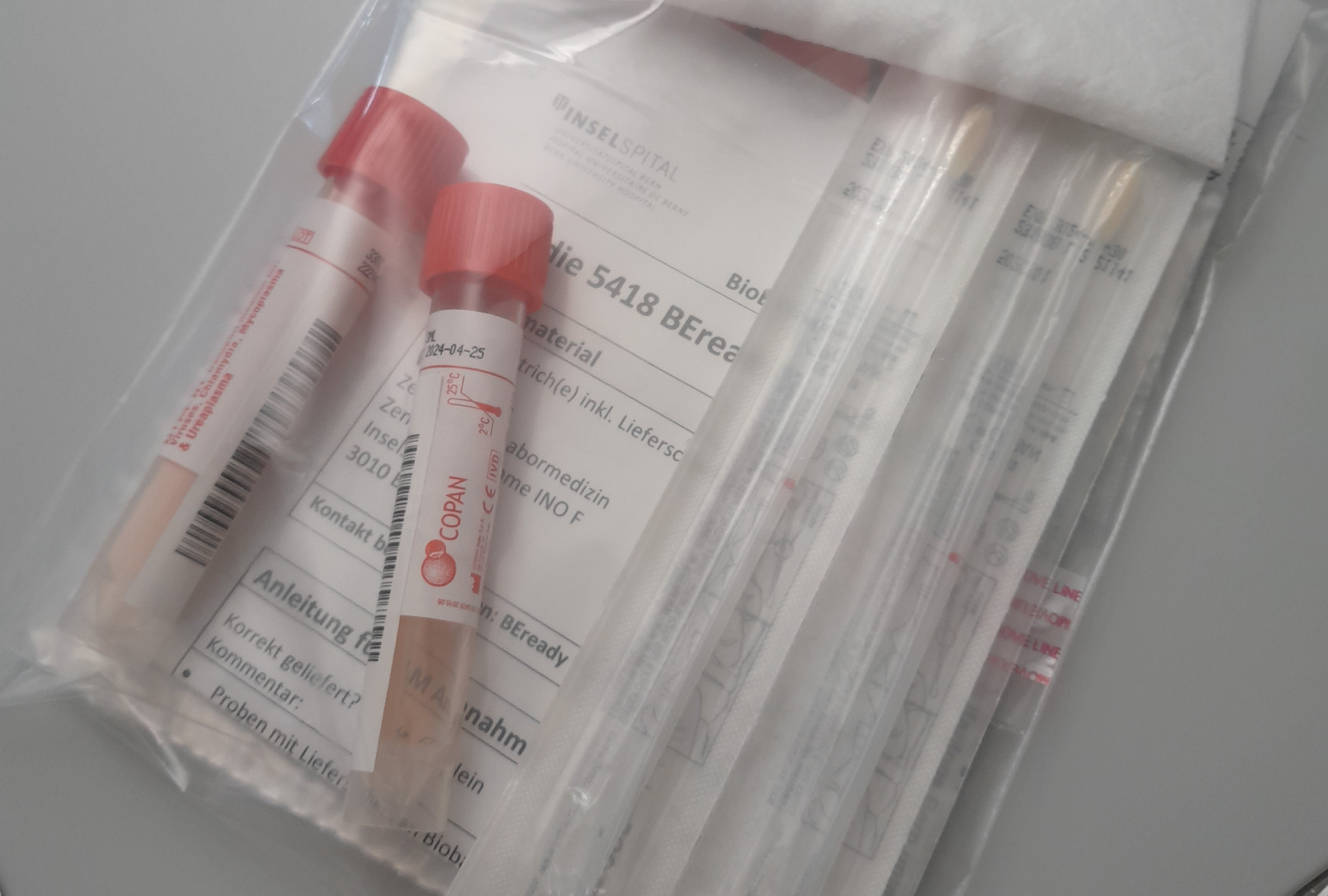
This research was conducted as part of the pilot study for the "Bern, get ready" (BEready) study in the canton of Bern, Switzerland. The aim was to test whether it is possible to establish a group of households that reliably reports cases of cold and flu symptoms over the course of a year. In the event of illness, participants had to take nasal swabs themselves and send them to the study team to be analysed for viral causes of respiratory infections. They also had to complete a questionnaire about their symptoms. To understand how viruses spread within a household, asymptomatic household members and pets were also tested after one week.
Text by Karin Grimm & Eva Maria Hodel
Why did we do this research, and why is it important?
At the start of the COVID-19 pandemic, reliable real-time data was lacking. This made it very difficult to establish evidence-based protective measures. Should another pandemic occur, we must collect biological samples, such as nasal swabs, quickly. With the help of biological samples, we can better understand how diseases are transmitted and develop targeted protective measures. Testing pets is also important, as they live in close contact with their owners. Many pandemics originate as zoonoses; diseases that can be transmitted from animals to humans.
How did we do this research?
We invited a random selection of households in the Canton of Bern to participate. The households included adults, children, and pets (dogs and cats). During an initial face-to-face visit, we showed participants exactly how to carry out the nasal swabs correctly. After that, they reported respiratory illnesses in their household for a year, completed a questionnaire, and sent in nasal swabs. First, participants with symptoms tested themselves; one week later, the rest of the household was tested. We examined
- how many samples were actually sent in when symptoms were reported,
- in how many samples viruses were detected (comparing people with and without symptoms in the same household),
- whether pathogens could be found in the samples from pets, and
- how simple and comfortable participants found taking the swabs themselves.
What did we find out?
A total of 108 households with 193 people and 44 pets participated. 188 participants in 78 households reported symptoms of a respiratory infection. Accordingly, we expected 387 nasal swabs and received 336 (representing 87%).
- Viruses were detected in 60% of people with symptoms. Most commonly the common cold virus, known as rhinovirus.
- In people in the same household without symptoms, viruses were found in only 6% of the samples.
- No viruses were detected in the 24 samples from pets.
- The majority of participants stated that the nasal swabs were easy to perform and not uncomfortable.
What does it mean?
The study showed that establishing a cohort of households that independently sends in biological samples (nasal swabs) for pathogen analysis when symptoms occur is feasible and works well in principle. The quality of the collected samples was good enough to detect pathogens reliably. The proportion of symptomatic people in whom viruses were detected was as high as in other scientific studies.
Thanks to this pilot study, we were able to further optimise key procedures for the subsequent main study. In the event of a future pandemic, we can now collect data and samples very quickly. This helps us to better understand transmission routes and develop effective protective measures or treatment options.
Further information
Full article reference
Grimm K, Hodel EM, Gasser L, et al. Feasibility of studying respiratory infection transmission in a Swiss household cohort: Findings from the BEready (“Bern, get ready”) study. International Journal of Infectious Diseases 2026. doi: 10.1016/j.ijid.2026.109019.
You can find the whole article in English here.
Contact
Prof. Dr. med. Gilles Wandeler